Some of them were right bastards. That being people among whom I spent part of my youth. Duch Christians, like American fundamentalists, can be perfectly horrid people, judgemental and sneering. I was reminded of this by cruising into a couple of webpages that dealt with Valkenswaard and its inhabitants. Fortunately most of them were not like that.
I remember Valkenswaard with slightly more fondness than distaste.
But I do not keep close contact with any of the people from that part of my life, and actually know only two of them on Facebook. That's not really their fault, as it's been quite a number of years since I returned to the States, and I never was socially talented.
Sunlit summers, rainy days, deep café verandas, long long evenings.
Fried snacks. Indonesian foods. First taste of herring.
Cigars. The aroma of coffee.
Silver grey sky.
One memory which particularly lingers is of long hours in the public library in Eindhoven, the metropolis ten kilometer northwards. An industrial city with a technical university and a dull bourgeois culture. Plus browsing at De Slegte, a multi-storey second hand bookstore.
Then maybe more Indonesian food, fried snacks, or coffee.
The trainstation also recalls fond memories for me. Probably the main reason I still like stations. Some Dutch and English small towns are charming in that regard. Older architecture, between functional, industrial, and civic pride from bygone eras.
Valkenswaard used to have a functioning station, but when we lived there it was already long defunct. That line hadn't run in ages, and within the town itself the tracks had been removed, leaving a broad boulevard cutting through the town to the east of the city centre, past the Willem II cigar factory. Which now no longer exists either.
Every town in the Kempen region is visually dominated by a church. Around which are often the most lively drinking holes in the place, which nowadays are busier than the house of worship. Cultural priorities have shifted quite a bit in the post-war period.
Coffee, fried snacks, and Indonesian food are nearby.
Yeah, I miss those.
==========================================================================
NOTE: Readers may contact me directly:
LETTER BOX.
All correspondence will be kept in confidence.
==========================================================================
Warning: May contain traces of soy, wheat, lecithin and tree nuts. That you are here
strongly suggests that you are either omnivorous, or a glutton.
And that you might like cheese-doodles.
Please form a caseophilic line to the right. Thank you.
Showing posts with label Valkenswaard. Show all posts
Wednesday, July 02, 2025
Friday, August 11, 2023
AND EVERYTHING SMELLS OF VICTORY
South of the town there are bogs and fens. And, seeing as it's in the Netherlands, north of the town too. As well as to the east and west. But the ones to the south are far closer. The local folklore holds that there is an entire Spanish army buried in the mud, as with the weight of their armour and weapons they could not traverse the soggy terrain and got stuck.
That would have been about four centuries ago.
Some people say there are Napoleonic soldiers there as well.
Think of a typical Northern European peat bog.
A shadow at the edge of your subconscious, lurking, just waiting to leap out at you.
Four centuries ago the climate was colder, so there was no malaria. Just the ague. Which it turns out, was actually a strain of malaria, though not recognized as such. It's very Edward Goreyesque country. One expects an old glue factory with child labourers on the edge of the Great South Swamp. It's also an exceptionally beautiful area, great for walking along the footpaths and dirt roads that course meanderingly through it. A wild bird reserve. When I was a teenager I'd go there after school, to smoke a pipe or two in peace. Especially at the end of summer or in early autumn. Even in late November if there was only light rain. Strong tea afterwards, and the fragrance of a balkan blend perfuming the air. The smell of a soggy peatish bog is rather tannic, vegetal, mildly fermentive, faintly rotten.
There are copses of pine and scrub, reeds, heather.
For some reason I've had that aroma in mind recently.
A profound stretch of sensory confusion.
==========================================================================
NOTE: Readers may contact me directly:
LETTER BOX.
All correspondence will be kept in confidence.
==========================================================================
Thursday, May 19, 2022
NOT VERY FAR AT ALL
Remembered from a few years ago in Spring, and elsewhere: A pot of tea, the courtyard under the overhang, a fresh tin of tobacco, and a quiet afternoon playing hooky.
With a dense book about geology.
Contrast this with an ideal afternoon in an imaginary universe: Malcolm silently closed the library doors behind him, opened the French doors to the terrace, and slid the volumes of the encyclopedia forward to reach behind for the sherry. Along with the dizzy romance novel, the new tin of pipe tobacco, and the pot of tea, he had everything to avoid Mrs. Beezle and her fierce housekeeping for several hours. The sound of cricket practice at the boys reformatory was faintly audible from a long way off.
Today's plans: Head over to C'town with pipe and pouch sometime in the afternoon. Avoid tourists while smoking, following milk tea at a bakery where they never go. Quietly bellyache to myself about the maltreatment old trouts with pipes receive from the modern age, with its limitations on indoor enjoyment of tobacco with a cup and book.
As you might expect, I am sitting with a pipe and hot beverage right now. Because this place needs to air out before the other person who lives here returns home (her bedroom door is closed), this comfy situation cannot continue much past noon.
The most significant change over the past few decades is that smoking my pipe in the afternoon is no longer accompanied by tea, a book, and a suitable place to sit down. Over the years I've become less attuned to climactic conditions, whereas in my teenage years the weather did not phase me. Nowadays, an indoor environment and creature comforts appeal slightly more. And I resent not having that choice.
The painting above is the Malpie Fen area south of town, vicinity of the Saint Benedict Abbey (Achelse Kluis), near the Belgian border. Teeming with wildlife. Including, unregretted, mosquitoes, gnats, and other bugs. The Dommel river runs through it.
I am not a bird, so I do not miss the bugs.
It rained there more often than here.
Thanks to the internet, despite living in San Francisco, I am not that far away.
==========================================================================
NOTE: Readers may contact me directly:
LETTER BOX.
All correspondence will be kept in confidence.
==========================================================================
Thursday, May 05, 2022
UNHOLY WATERS
For several minutes I considered frustrating the big dog on the street outside who first avidly sniffed at all traces of other canines then assertively marked his territory. Three times. But that's MY hydrant, MY lamp post, MY parking meter! Gonna pee all over his signature!
Then I realized that I can no longer do that.
Too many cops in this neighborhood.
They enforce "adult" behaviour.
Still. Those things are all far more mine than his.
And I really wish he would stop acting like a damned conquistador.
All things considered it's probably a jolly good thing that humans no longer mark ownership or proprietary interest in things by pissing all over them. And please disregard the drunks in alleyways and doorways late at night, or the entire area south of Market Street.
As well as frat boys and many politicians.
Those are anomalies.
There were several dark corners in the peripheral brickwork of the church across the street from our old house in Valkenswaard. And over a dozen bars within easy walking distance. Many of the men who peed against the edifice on Saturday nights were part of the congregation Sunday morning. None of them were ever struck by lightening.
==========================================================================
NOTE: Readers may contact me directly:
LETTER BOX.
All correspondence will be kept in confidence.
==========================================================================
Then I realized that I can no longer do that.
Too many cops in this neighborhood.
They enforce "adult" behaviour.
Still. Those things are all far more mine than his.
And I really wish he would stop acting like a damned conquistador.
All things considered it's probably a jolly good thing that humans no longer mark ownership or proprietary interest in things by pissing all over them. And please disregard the drunks in alleyways and doorways late at night, or the entire area south of Market Street.
As well as frat boys and many politicians.
Those are anomalies.
There were several dark corners in the peripheral brickwork of the church across the street from our old house in Valkenswaard. And over a dozen bars within easy walking distance. Many of the men who peed against the edifice on Saturday nights were part of the congregation Sunday morning. None of them were ever struck by lightening.
==========================================================================
NOTE: Readers may contact me directly:
LETTER BOX.
All correspondence will be kept in confidence.
==========================================================================
Monday, December 20, 2021
DON'T WAKE UP
When I woke up it was with the bleakness of a more northern place in my head: the 'kleine markt' in Valkenswaard, on a dry winter day. Leafless trees, treeless leaves, solid small-town gentry residences, the insurance office and the old postal facility, city hall to the right, the protestant church for the carpetbaggers from "boven de rivieren" off to the left.
So, facing south. Grey. Very Edward Gorey-esque. And ages ago.
[Boven de rivieren: Above the rivers; the northern provinces, where life is fast, filled with Protestant attitudes, and less mannerly.]
What built the town was the cigar industry. It started when the place was mired in poverty and malnutrition and people died young. Nearly five generations worked there, rolling cigars, selling products to all of Europe, sending representatives abroad to learn about the world in addition to sourcing leaf from South America and the Indies, bringing back ideas about electricity, running water, modern medicine, and education.
Nowadays those cigar factories are all gone, of course, because traditional tobacco processing (fermenting and aging of Varinas and Besuki leaf) for the product that raised the place out of grinding poverty, while useful in its time (it took well over a century), is no longer part of the urban Netherlands. Gravid middle class citizens and educated doctors don't thoughtfully puff on their short elegant perfectos while considering which horses to bet on at the races anymore, small shopkeepers don't enjoy a corona over a glass of amber-hued firewater and a coffee at the café-billard before heading back for dinner. They no longer live above their businesses, but out in the residential neighborhoods; the cramped space upstairs or behind is rented out to a nice professional couple fleeing the denser cities and the crowds of the coastal provinces.
College kids home from Nijmegen or Utrecht for a few weeks don't purchase bundles of cheap smokes (the cigars with imperfect wrapper leaves sold at a low price, unbanded and without a brand to boast); I believe their current sinful indulgence might be having fried foods that contain meat instead of the pure vegetarian chow they eat when among their saintly classmates, or wearing socially irresponsible fabrics that require third world misery to make.
You understand of course that the Netherlands have changed. The postwar generations have completed what the Germans started; the old society and most of its grotty damp buildings and spaces have been removed, and brand new modern architecture with sharp corners and clean surfaces have been built instead. Except, of course, for picturesque inner city areas which were always photogenic. Amsterdam and Utrecht still look much the same.
But the suburbs are more modern and efficient.
Rotterdam is, as you know, a well-thought out sensibly built ultra urban hellhole filled with angry rioting yobbos and Feijenoord supporters. Not worth visiting, as fits the biggest port in Europe. Tourists never go there. The Germans flattened it, afterwards the Dutch rebuilt it differently.
Tobacco is so Old-World. Unhealthy, icky, and filled with colonial guilt.
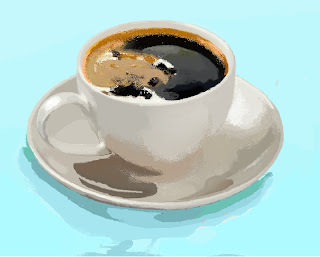
Unlike coffee, which the Dutch still passionately love. Which I'm drinking at the moment.
[The Dutch consume over twice as much coffee as Americans. I could sneer at us Yanks about that. A hazelnut caramel low fat frosty swirl is NOT a beverage that any adult should consume. Not even a Texan.]
The last two cigar factories in the entire Kempen, out of the hundreds that once flourished there, closed over a year ago. No, the pandemic had nothing to do with that, the economy and society changed. The formerly famous houses have changed hands, still extant brands and trademarks are produced elsewhere by large concerns which own them as investments.
The Dutch no longer smoke in cafes, restaurants, bars, and social clubs.
The stinky old way of life has permanently disappeared.
They've become rather boringly American.
I blame Coca Cola and jazz.
Plus Elvis.
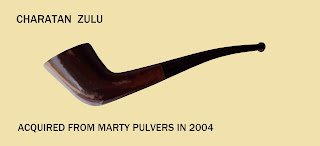
Smoked a Charatan with my first and second cup this morning.
Filled with a lovely flake from Cornell & Diehl.
A blend of red and bright Virginias.
It helped the memories.
TOBACCO INDEX
==========================================================================
NOTE: Readers may contact me directly:
LETTER BOX.
All correspondence will be kept in confidence.
==========================================================================
Monday, April 12, 2021
A LOCAL UNIVERSE
These past two days, for inexplicable reasons, I've been remembering the town where I spent my youth. Perhaps it's because the weather here in San Francisco has improved, and both the temperatures and the light coincide with some of what's stuck in my head from that period.
We moved to Valkenswaard when I was five. We had left Southern California when I was two.
I came back to the United States at age eighteen.
Though I've been back on visits a few times, it wasn't during Spring, but in Autumn. Valkenswaard in Autumn is lovely.
No, I have no idea during what season of the year the photo below was taken.
Our house was quite near that church.
As I now recall, almost everything was within easy walking distance. The drugstore, pharmacy, liquor store, general grocery stores, bakeries, and the old post office barely one or two blocks.
A tobaconist and bookstore just a little bit further, as well as a bicycle repair shop in the other direction. Dutch fast food and herring, plus bars and cafes, much closer.
In Valkenswaard I first learned about coffee, tea, chilipeppers (sambal!) and tobacco. Oh, and the opposite gender. With whom one could enjoy the other four things, supposedly, but drinks, hot stuff, and smokables were much more immediate and realistic.
==========================================================================
NOTE: Readers may contact me directly:
LETTER BOX.
All correspondence will be kept in confidence.
==========================================================================
We moved to Valkenswaard when I was five. We had left Southern California when I was two.
I came back to the United States at age eighteen.
Though I've been back on visits a few times, it wasn't during Spring, but in Autumn. Valkenswaard in Autumn is lovely.
No, I have no idea during what season of the year the photo below was taken.
[Copied from 'Valkenswird' on Facebook.]
Our house was quite near that church.
As I now recall, almost everything was within easy walking distance. The drugstore, pharmacy, liquor store, general grocery stores, bakeries, and the old post office barely one or two blocks.
A tobaconist and bookstore just a little bit further, as well as a bicycle repair shop in the other direction. Dutch fast food and herring, plus bars and cafes, much closer.
In Valkenswaard I first learned about coffee, tea, chilipeppers (sambal!) and tobacco. Oh, and the opposite gender. With whom one could enjoy the other four things, supposedly, but drinks, hot stuff, and smokables were much more immediate and realistic.
==========================================================================
NOTE: Readers may contact me directly:
LETTER BOX.
All correspondence will be kept in confidence.
==========================================================================
Wednesday, September 23, 2020
IT SMELLS DIFFERENT THERE
When I was a child we moved to the Netherlands, and I lived there till my very late teens, returning to the United States for college. Which is where I've been ever since, except for trips elsewhere. The town where we lived was Valkenswaard, a pleasant municipality near the Belgian border, surrounded by fields, forests, and peat. Potato country. Vincent Van Gogh is from that same area.
Valkenswaard had two decent tobacconists. A pretentious place next to Boekhandel Priem, the local bookstore. And a more friendly place run by an older man with gravitas and good taste.
Which is where I bought the pipe below.
It's one of the few tangible things I brought with me from that place and that time.
My tobacco of preference has changed considerably since high school, but I still enjoy smoking a pipe because it reminds me of so much, much of which is Valkenswaardian in tone.
Many of my tastes, attitudes, and ideas are in some ways formed by that pleasant environment, augmented by the library my parents brought with them from the States. Underneath the modern semi-sophisticated urbanite veneer, I am still a small-town raging liberal who reads too much.
Though I sometimes miss Valkenswaard, I do not think I could go back and live there again. There is too much here in America, where my kin had stronger roots, than there. And I would miss Chinatown, where I like to hang out, which has much the same small town feel to it. Plus Hong Kong Milk Tea, grocery stores with all the right things, restaurants where they know me, and many people who recognize me and say 'hi'.
At some point I'll take a trip back to the towns of North Brabant (and Amsterdam, Utrecht, Den Haag, Naarden) and Flanders, as I've done in the past. Which is always enjoyable, but about three or four weeks is all I can bear of the Dutch. Among the things I usually do when there is purchase Dutch cigars, second hand books -- because Dutch language literature is hard to find here -- and eat lots of Indonesian and Chinese food. Indonesian because the Netherlands has a splendid sampling of that. Chinese because it's fun to staggeringly surprise restaurant staff by speaking Cantonese AND have something that isn't deep-fried.
Under present circumstances (Covid), sitting on a cafe terrace with a hot cup (coffee or tea), a cheroot (Glorie van Java OR Sumatra tuitknak), and a copy of the Den Haag or Amsterdam newspapers isn't doable. and Americans aren't welcome in most of the world, because of our ridiculous and infantile approach to facemasks, infection, and pandemics.
But eventually we'll be allowed there again.
Not all of us are dangerous.
Or mad.
Had some Astleys No. 109 Medium Flake while walking in the pipe pictured above. In case you were wondering. It's an "Autumnal" pipe tobacco.
Very reverie inducing.
TOBACCO INDEX
==========================================================================
NOTE: Readers may contact me directly:
LETTER BOX.
All correspondence will be kept in confidence.
==========================================================================
Friday, April 10, 2020
A SMELLY PLOT
My apartment mate would not be pleased. I am starting the day with a long Oliva Connecticut Cigar at my computer in the teevee room, with a stuffed turkey vulture in the other chair for company. He is pre-occupied with an egg. How do mother birds give birth to chocolate blobs?
Somehow, he feels, that must be wrong.
Are those things even edible?
Nah, I shall not mention the bunnies.
He's disturbed enough already.
The thing is, I am not supposed to be smoking inside. But she left nearly an hour ago to go to work (essential services), so with her door closed and the windows open, I can risk it. A cigar takes six hours to air out, a pipe four hours. So I'm okay till the afternoon, and if I cook myself a spicy curry for lunch she'll never know. Chilipaste, trassi, ginger, and spices.
Envelopes must be pushed for an Oliva cigar.
Four days ago it was Alec Bradley.
Two days ago, Placencia.
You cannot expect a man who grew up in a town known for cigar factories, smugglers, and talented criminals to be a good little weasel. Sometimes a cigar is more than just a cigar. It's a connection to a different world.
Admittedly one that reeks, and has stains all over it (like my bathrobe), as well as little deposits of ash, and a faint whiff of cow shit in the breeze, but it's a world with sunlight and forsythia, and at this time of year bulbs that come into bloom, as well as the first blossom buds on apple trees in back yards behind old brick buildings.
It is the time for strong coffee, and long jaunts into the fens south of town. Wildlife, and new growth. The hopefulness of gentle spring rain.
Maintaining one's sanity in this day and age requires the companionship of a turkey vulture, pipes or cigars, and coffee. Much as it ever was.
I pity people who lack those three great things.
Their reality is grim and terrifying.
==========================================================================
NOTE: Readers may contact me directly:
LETTER BOX.
All correspondence will be kept in confidence.
==========================================================================
Thursday, November 07, 2019
IT SMELLS A BIT
In discussing smells I half remembered people and places from the distant past. Having grown up in North Brabant, where my parents moved the family when I was five years old, some aromas are deep-seated and vibrant. Dead Autumn leaves. Fresh strong coffee. Gasoline. Tar. Cow dung. Maryland ribbon ("baai") smoked in a pipe. Frying chili paste, because everything goes with sambal. Sweet Indonesian style soy sauce. Coriander seed powder ("ketoembar") and ground nutmeg added to meat dishes on the stove. Lemons, and over-ripe Autumn fruits. Zware shag tobacco.
[Lived in the Netherlands since I was two. First three years in Utrecht province.]
During the rainy time of year, wet woollen clothes.
You know, soggy classmates and sweaters.
Still damp at the end of the day.
The eastern end of North Brabant reeks a little. It's a moist part of the world, with peat bogs, oaks, pine trees, and rich evocative stenches.
"They've got cows there, boy, what do you think it smells like?!?"
---Bucko James, in Gentlemen Wear Lace
Valkenswaard of course also smelled of cigar factories -- a smell I love -- as did Eindhoven near the old Karel 1 factory, whereas in my mind Tilburg must pong of pee (cloth industry) and Breda of drunken soldiers. Weert, Aalst, and Leende are all beer and frying potatoes, Dommelen for some reason is fresh coffee and hay. But aroma-wise the entire area was dense and fecund; things grow there. No burning hills, like Northern Califonia where I live now (a dry sterile odour), or antique sewers (the SF Financial District), or unwashed crazy people. Or the peculiar funk of druggies.
The perfume of cigar leaf hung over Valkenswaard, almost always present in the background, dominating the closer you got to Willem II or Hofnar. Thick, velvety, a bit sharp. Besuki filler ("binnengoed"), Sumatra wrapper ("dekblad"), a touch of Brazil for spice.
The town had grown prosperous because of the cigar industry.
Paved streets, running water, electricity, education.
Nowadays not a single cigar is rolled there.
What does it smell like now?
==========================================================================
NOTE: Readers may contact me directly:
LETTER BOX.
All correspondence will be kept in confidence.
==========================================================================
Wednesday, May 24, 2017
STANK MASTER
When I was sixteen my tobacconist ran out of my favourite weed. The company that supplied it to him had long ago disappeared, and I had happily been consuming his old stock for over a year. Both of us were disturbed, for different reasons. He suggested that I try the three tins of Dunhill tobacco that he still had from ages ago in the meantime.
That being Standard Mixture, MM965, and Nightcap.
I bought another tin of Nc two days ago.
It brought back memories.
No, I have no wish to be sixteen again. It was a truly horrible time to be an American in Europe. They still hated us for what we had done in Vietnam. Which was all the more galling because I already knew perfectly well what they had been up to during their own benighted pasts.
Another reason I do not remember those times too fondly was that my mother had cancer, and would not live very much longer. She passed away a few days before her 56th. birthday the following year.
[Proper "burgerlijke" people do NOT die of cancer. But it cannot be helped, we suppose. After all, they are Yanks. Don't associate with them too much, and greet them semi-politely when you encounter them.]
Yes, she smoked. But it wasn't smoking related.
First a breast, then later the ovaries.
She kept her wit up to the end.
A remarkable woman.
When she found out I smoked a pipe she gave me a long stern lecture on the evils of tobacco, including terms like "sloping forehead", "recessed gums", "testicular weakness", and so on. She also mentioned that it stunted ones' growth, and seeing as she herself was less than five feet (four foot ten or eleven, if I remember correctly), and I already towered over her, that didn't make much impression.
Besides, she huffed three Kent Filter Kings while talking.
She started smoking later in life, while she was in the Navy.
I tried my first cigarette when I was eight or nine, and wasn't too impressed. It wasn't until I lusted after a hunk of polished wood in the window of the cigar shop next to Priem's bookstore (at thirteen years of age), where I was a regular customer, that a light went off. A couple of months after acquiring a pipe I finally purchased some tobacco.
[There used to be a type of blowsy European middle-class snob-woman, too much make-up on and clothes just a little too snooty and stylish, who would suck up to people she thought of as "quality", while cold-shouldering everyone presumed to be of lesser grade. It was often hard to tell them apart from women who just overdid the facepaint. This is mentioned because they often managed their husband's cigar shop, or worked at bars and cafes.
The young pipesmoker of course is something of which they DO NOT approve.]
Shortly afterwards I started reading the Maigret books; that both he and his creator were pipe smokers did not strike me as in any way remarkable at all. Men, naturally, would smoke a pipe. Especially in the elsewhere mythical part of the world. You know, other places.
A YOUNG MAN PONCING AROUND WITH A BRIAR
Pipes are in an entire aesthetic class by themselves, with multiple facets that appeal and enchant; cigars beguile somewhat also, though not nearly as much. Cigarettes, especially Turkish (usually German, Dutch, Austrian, and English) and high quality Russian (again, not necessarily from Russia), had a charm that was augmented by time and place (cafes, for instance, or grand hotels in other places). But if one is forced out on to the street or into empty alleyways, the attraction fades, while pipes grow in magic. Cigars are a halfway house; no challenge, no great character either.
Cigarettes are what prompted the anti-tobacco rules, and will always be associated in my mind with limitations and the closing of doors.
[Long lacquered bitch nails and Stuyvesant cigarettes. Not the expensive international cigarettes, because as long as you keep the package covered, no one knows you're not that good. Speak proper Dutch and sneer at the provincial accents of people who are kinfolk; you regret being related to the less than perfectly upper middle class members of your family.
Do NOT drink genever, because it's déclassé.]
Yenidje non-filters (Sobranie) in the white tin are no longer made, nor are the Imperial Russians. The company was sold to Gallaghers in the eighties, is now owned by Japan Tobacco, and whatever is still produced under that name not only isn't as good as it used to be, but is not available here in the United States in any case. Khedives (lovely Turkish ovals) aren't around anymore either, or the 555's in the yellow tin.
[Caballero Cigarettes were distinctly 'hip', and aimed at people whom we don't really like.
St. Michel ("crotch-stabbers") from Belgium are a bit lowerclass, you know, while American brands are just not done by deftige people.]
French cigarettes have been impossible to find for over a decade.
Oriental cigarettes were mostly my Berkeley phase.
One can no longer puff at the Cafe Med.
And the world has changed.
Cigars, nowadays, keep tobacconists in business, so they still have a few positive associations. But many of the people who smoke them are social deviants and politically dubious.
[Quality cigars, NOT those bolknaks the peasants smoke! Something with the name "Havana" on the label, and fancy packaging that would not look amiss next to a crystal ashtray in the salon. Stogies are something farmers puff when they're in town having a drink with their kinfolk at a local establishment.]
Pipes have simply always offered more than any other form of smoke.
[An added benefit, being that other people are automatically out of their league when considering the pipe smoker, need not stressed. That's too often countered by their demand that one should only smoke caramel and fruitloop blends, or ciggies instead.
Here, have a Peter Stuyvesant!]
The smell of good clean pipe tobacco (not the aromatics which are ninety percent of the market) has elements which clue in to the deepest centres of the brain. Memory is spurred and awakened by smells.
Especially complex and evocative smells.
The past comes alive.
My apartment mate, like most people considerably more civilized than myself, naturally has a different opinion.
TOBACCO INDEX
==========================================================================
NOTE: Readers may contact me directly:
LETTER BOX.
All correspondence will be kept in confidence.
==========================================================================
Thursday, March 02, 2017
ATTENTION, BARGAIN SHOPPERS!
Every Thursday there's a street market in Valkenswaard on the square in front of the Saint Nicholas church, which is in the centre of town. Valkenswaard is a small city of plus or minus thirty thousand inhabitants in the south of the Netherlands surrounded by fens and forest, ten kilometres from the Belgian border, an equal distance south from Eindhoven.
Eindhoven you may have heard of: Philips Electronics.
Valkenswaard is a pleasant burg.
Good people.
But if we hadn't moved there when I was six, I never would have heard of the place, and likely not visited either. Just mentioning that for context.
Very much is offered at Dutch street markets, your money is worth more there. Such things are among the more likable aspects of life in the country.
DE MARKT -- VALKENSWAARD
[SOURCE: https://www.youtube.com/watch?v=u8MeCZNVdfg.]
The author of this clip is Marijke Maes, who may have been in highschool in 2013. Probably at the successor to the Hertog Jan College (which no longer exists). Other than that, I do not know much (or anything, really) about her.
My mother would in Autumn drag me along to the market when she bought bulbs to plant in our garden; because of her lumbago, sticking them in the ground under her supervision was my job. In Spring and Summer she bought young shrubs. We had a lovely garden.
My father, brother, and I would often get herring at one of the seafood stands. Or smoked fish, which was delicious.
I remember one summer day when a sudden rain storm flooded the bins of a fish merchant, whose wriggly eels made a desperate bin for freedom in the gutters along the east side of the square, approximately where Jo D'n Urste is now. Several of us boys gleefully chased them before they could disappear down the drains.
Very late in the year you could also buy freshly dressed game there.
Somewhere I still have recipes for Konijn met Mosterdsaus, Konijn met Donker Bier, and "K'nien mee Prumen" (stewed thumper with dried plums). Haven't done those in years, as my apartment mate fondly remembers the pet bunny rabbit her brothers had when she was still a child.
Yeah, I could do probably it when she's not at home.
We don't eat together, and it would be easy.
But evenso. She'd probably find out.
Not worth the recrimination.
==========================================================================
NOTE: Readers may contact me directly:
LETTER BOX.
All correspondence will be kept in confidence.
==========================================================================
Eindhoven you may have heard of: Philips Electronics.
Valkenswaard is a pleasant burg.
Good people.
But if we hadn't moved there when I was six, I never would have heard of the place, and likely not visited either. Just mentioning that for context.
Very much is offered at Dutch street markets, your money is worth more there. Such things are among the more likable aspects of life in the country.
DE MARKT -- VALKENSWAARD
[SOURCE: https://www.youtube.com/watch?v=u8MeCZNVdfg.]
The author of this clip is Marijke Maes, who may have been in highschool in 2013. Probably at the successor to the Hertog Jan College (which no longer exists). Other than that, I do not know much (or anything, really) about her.
My mother would in Autumn drag me along to the market when she bought bulbs to plant in our garden; because of her lumbago, sticking them in the ground under her supervision was my job. In Spring and Summer she bought young shrubs. We had a lovely garden.
My father, brother, and I would often get herring at one of the seafood stands. Or smoked fish, which was delicious.
I remember one summer day when a sudden rain storm flooded the bins of a fish merchant, whose wriggly eels made a desperate bin for freedom in the gutters along the east side of the square, approximately where Jo D'n Urste is now. Several of us boys gleefully chased them before they could disappear down the drains.
Very late in the year you could also buy freshly dressed game there.
Somewhere I still have recipes for Konijn met Mosterdsaus, Konijn met Donker Bier, and "K'nien mee Prumen" (stewed thumper with dried plums). Haven't done those in years, as my apartment mate fondly remembers the pet bunny rabbit her brothers had when she was still a child.
Yeah, I could do probably it when she's not at home.
We don't eat together, and it would be easy.
But evenso. She'd probably find out.
Not worth the recrimination.
[Foto: BHIC, Collectie Provincie Noord-Brabant]
==========================================================================
NOTE: Readers may contact me directly:
LETTER BOX.
All correspondence will be kept in confidence.
==========================================================================
Tuesday, January 10, 2017
I'VE GOT A WHOLE TIN OF IT!
It's official: either I should never breed, or I am hardier stock than you ever thought possible, my genetic material is resilient and capable of surviving dynamite. But probably not the latter. After my haircut I had a late lunch, then went outside to smoke a pipe. Let us assume stupidity.
Or some raging tough craziness. That also works.
Whatever excites you inordinately.
I've got it. Yes.
Good thing I found an awning, because it started bucketing down. Man, that bowl of Dunhill Dark Flake was quite delicious! So, against my own better judgment and the suspicion it was berserk to do so, I had another cup of milk tea after I finished, in order that after a brief interval I could go stand outside again in this weather we're having, with a pipe in my mouth filled with the same tobacco, and experience it even more so.
Bigger bowl, more rain, driving wind.
I do not like foul weather.
* * *
Picked the wrong awning this time. But having committed myself, I would not let sanity rear its ugly head, and beaming like a maniac I braved the storm. Dunhill Dark Flake. It is self-destructively good.
Do try some. Today.
Got home with soggy cold feet, stiff leg muscles and wet pants, soaked shoulders. I had an umbrella, but I used that to keep my pipes dry.
Both pipes, both times.
This weather isn't fit for man nor beast.
But it suits pipe smokers.
By necessity.
Years ago, when I lived in Valkenswaard, I would smoke outside in the middle of a rainstorm only if I didn't have the money for a hot beverage at a nearby establishment. That isn't a concern now, but one cannot smoke inside a place of caffeine purveyance in today's San Francisco.
Can't do it in Valkenswaard either, I've heard.
They are as nuts as we are.
倔叔叔
Thank providence for awnings in Chinatown. It's beastly out there in the rain, and lonely, but without those awnings many more people would suffer, and helpless little children would be exposed to second-hand smoke like you wouldn't believe. Because if Uncle Grumpus wants to smoke, there had better be something to keep him halfway dry, or everyone will suffer.
Uncle Grumpus is nobody's fool.
And not entirely crazy.
The only thing better than smoking a pipe outdoors in a horrid rainstorm in San Francisco Chinatown after a hot cup of milk tea would be smoking a pipe indoors during a rainstorm, WITH a hot cup of milk tea.
Indeed, that would be absolutely divine.
There's still plenty of the Dunhill Dark Flake left. Tomorrow I shall head into Chinatown again. Lunch and a pipe full, even if it rains. Maybe two.
Darn good thing I do not live in the High Sierras.
There is probably no milk tea there.
Nor any awnings.
TOBACCO INDEX
==========================================================================
NOTE: Readers may contact me directly:
LETTER BOX.
All correspondence will be kept in confidence.
==========================================================================
Saturday, September 12, 2015
VALKENSWAARD IN PREVIOUS TIMES
The southern part of the Kingdom of the Netherlands fades from coastal or estuarine swampland in the west to gently rolling countryside on the way to Germany, along the way displaying peat bog, scrub and wooded stretches, expanses of farmland, and small towns whose church spires are visible afar. This is the often beautiful and sometimes depressing scenery of Vincent Van Gogh, and earlier, Brueghel.
Here lie the landscapes that inspire, and will cause obsession.
They form and malform the visual imagination.
Malleable points of reference.
Dreams.
And madness.
A family from California once headed in this direction, and settled down.
It appeared to be a good idea at the time.
TENANT FARMERS, SAND, AND FALCONRY
Valkenswaard, which lies in the east of this area, is equidistant from Eindhoven to the north and the Belgian border southwards. Pine forests start on the north side of town, fields stretch to the Dommel river on the west, and farms give way to the Malpy Fens a few miles before the frontier.
It seems isolated, but nowhere in the entire benelux is truly distant from anywhere.
Not if you receive deliveries from Blackwell's Bookstore in Oxford.
Book deliveries from the civilized world, Dundee Marmalade, Twinings Tea, and tinned plumpudding, are the mark of exiles worldwide. Along with Rattrays tobacco blends, and the Balkan Sobranie smoking mixture.
Having returned to the United States long ago, what I really want nowadays is the occasional pouch of Heerenbaai Tabak, which is ribbon-cut Maryland leaf, soft and fragrant ("zacht en geurig"), strong Dutch coffee, and, naturally, deep fried objects that cannot be described.
[Strong Dutch Coffee: most of the still extant native brands are now of questionable provenance, having been buggered up by an American company, then off-shored, and finally associated with yet another miserable American multinational in a German guise.]
Our house was diagonally opposite the Saint Nicholas Church, next to the Kerkweg. Driessen's drugstore was on the other side of the Kerkweg. The police station was down the block, facing the apotheek as well as the old Amsterdam Bank building across the square.
Small businesses, grocery stores, wholesalers of dry goods, household goods, banks, a bicycle repair shop, and insurance companies, alternating with private dwellings and the occasional eatery.
There weren't very many cafes or restaurants in the centre of town then, but the last time I went back for a visit, every other building on the Markt Plein, Luikerweg, Leenderweg, and elsewhere had been turned into an eatery or drinking hole. Mostly drinking holes.
My childhood home is now a bar.
From this you might assume that alcoholism presents a major business opportunity in Valkenswaard, and you would probably be right. But tobacco has a much stronger history. At one time there were over two dozen small cigar factories. They're gone now, but they are fondly remembered. The last two (Hofnar and Willem II) shut down in the nineteen eighties and nineties respectively. Nearly every family had based its march from the grinding poverty of the nineteenth century to the middle-class prosperity of the twenty first by means of employment in the smoking trade.
[Small cigar factories: Starting in 1865 when falconer Jan van Best established a small manufactury with money he had been left by a patron, there were over twenty such by the end of second decade of the twentieth century, employing leaf-strippers, bunchers, rollers, and warehousemen. Mostly younger women rolled the narrower diameter smokes, more practised hands produced the coronas and figurados. By the midtwenties, nearly half of the working population was employed in tobacco. It was an occupation that for over a century seldom experienced unemployment.]
When I was a child, tobacco was not part of my personal programme yet. But coffee, French fries, and the occasional unidentifiable fast-food comestible, along with books, definitely had a place in my life.
[Unidentifiable fast-food comestibles: frikandel, kroket, bami bal, nasi bal. Delicious.]
Every Wednesday afternoon I would park my bicycle outside of Priem's bookstore, go in, and spend two or three hours happily reading. They didn't have much in English, but their selection of fun stuff in Dutch was rather good, as was the section with comic books. They are still in business, and flourishing more than ever.
On a rainy afternoon, nothing was more enjoyable than forgetting the entire world while safe and dry amidst books.
Eventually I also discovered De Slegte in Eindhoven, as well as autres bibliothèques et librairies, but in Valkenswaard, Priem was an oasis.
I shall imagine that later crops of young people have also gratefully discovered the place, and likewise savoured time spent there.
Boekhandel Priem is a priceless treasure.
It's where the world begins.
THE TIME OF FRAGRANT LEAVES
The tobacconist next door to Priem is no longer in business, but far further down the Eindhovensche Weg the shop where I picked up tins of Balkan Sobranie and wonderful cigar factory seconds during my high school years has been transformed into Compaenen van Ravenstein, an emporium of luxury smokers requisites, including both Cubanos as well as Dutch cigars, and a selection of wines which might be enjoyed with your smoke.
They don't appear to be set up for internet purchases, but they can be contacted: write a letter to Messrs Meulensteen.
Returning to the United States after a trip back years ago, my luggage was filled with Dutch literature and cigars. Approaching customs I staggered under the weight, and was filthy, sweaty, exhausted.
"Do you have anything to declare?"
"No sir, not a thing."
"What's in your bags?"
"Books and dirty laundry. Lots of dirty laundry."
"I see..... Welcome home."
There's something about a fine Dutch cheroot that makes life grand.
It's worth suffering for.
The store is now in its second or third generation of ownership, and bigger and better than ever. Harry van Ravenstein, who sold the business in 2008, knows all about pairing pipe-tobacco and Scotch Whisky.
Which is priceless information.
THE ROAD TO THE REST OF THE WORLD
Closer to the Meerendreef, which marks the northern boundary of the settlement, the old house with the straw thatched roof where rats lived above the residents is, of course, a precious architectural masterpiece, and carefully preserved. We had a chance to buy it, and chose not to.
My mother did not want to sleep under so much combustible material.
Or the rats. For some reason she wasn't okay with rats.
I passed it every day during my teenage years.
It looked like a comfortable house.
The High School to which I went no longer exists -- conceivably too many brilliant graduates went on to stints in prison for brigandage or incendiary activities -- and the youth club where I hatched any number of plots to take over the world, along with several dissolute comrades of a similar bent, closed many years ago also.
[Youth club: Jeugdociëteit Parsifal. Formerly Aquaradius, in the Draaikolk building on the Maastrichterweg, where it was on the top floor, and, apparently, considered a serious nuisance. When that location was closed down, the intellectual rowdies invaded a working men's bar near Willem II for over a year, until the municipality relented and rented us an abandoned and falling apart building on the Eindhovenscheweg, on the condition that we act nicely, and also fix up the premises. I spent many happy afternoons and twilights there, swilling tea and smoking dark stinky Latakia blends in my pipe. It was just up the road from the aforementioned tobacconist.]
A long time ago, Plane Tree Lane ("Plataanlaan") past the Hertog Jan College was a spooky deserted area permanently in the shade from the old growth, but the last time I saw it it seemed gilded with sunlight, although still haphazardly unpaved and bumpy.
I don't know why I didn't remember it being beautiful.
Perhaps because one of my sadistic physical education teachers forced us all to jog in this section of the woods for hours, in lieu of anything more creative in the field of exercise.
Rain, sleet, frost and fog, occasionally snow.
I wonder if any of the kids at the high school ever got picked off and eaten by trolls there because of him.
THE ENDS OF THE EARTH
The town peters-out abruptly beyond this point. It's a half hour by bike to Eindhoven, which counts as the nearest big city. But Eindhoven, though exotic and foreign, never seemed as special.
It was simply where teenage boys went to buy smutty magazines.
Not a very exciting place, all things considered.
Stranger food. And worse coffee.
Valkenswaard is one of the navels of the world.
The centre of its own discrete universe.
Timeless, and stil fragrant.
APPENDICES
CIGAR COMPANIES FOUNDED IN VALKENSWAARD
A. Brangers; Botycos; Erba (N.V. Gijrath's Sigarenfabrieken); Firma Baeten; Firma Gebroeders Jeurissen; Firma H. Kersten & Co.; Firma Van Aken & Van Veldhoven, Firma Van Hoof-Swinkels; Firma Van Veldhoven en Van Der Heijde; Firma W. Helling en Co.; G. Plompen & Co.; Gebroeders Neijnens (Neijnens Brothers); Gebroeders Rijkers (Rijkers Brothers); Gebroeders Van Best (Van Best Brothers, Hollandia brand); Hofnar; H. Kinjet (Hamilton brand); Holland-Amerika; J. Heesterbeek & Co.; J. Peters; J. Smulders; Lord Carnavon; N.V. Jasneva (Jaspers & Snellens; Hendrick Hudson cigars); S. de Louwere; Taberna (Chris Van De Kerkhof & Zoon); Texas Sigaren Fabriek (Firma Hoekx en Maas, "Texas Tips"); Theo van Gerven; Van Aken & Co.;Willem II.
Et mult altres.
Altogether, there were over seventy brands from this town.
Only Hofnar and Willem II survived past the sixties.
SOME TOBACCOS USED IN DUTCH CIGARS
MAJOR TYPES:
Sumatra, which is soft, silky and thin; of an even light-medium hue, fragrant and almost floral. Often used for wrapper ("dekblad"; capa).
Java (Besuki regencies), thicker and a little coarser, stronger than Sumatra, and while naturally aromatic, it is a drier fragrance, more incense like and resinous. Both binder ("omblad"; banda, capote, ) and filler.
Brazilian, having both a spiciness as well as a sweetness; filler only ("binnengoed", tripa).
Cuba, also called Havana, a rich-tasting medium full leaf from Pinar del Río with a broad flavour palette, earthy and somewhat "salty".
Often used condimentally as part of the filler melange.
Finer qualities are suitable as wrapper leaves.
It feels "toothy" to the finger tips.
LESSER TYPES:
Varinas, that being the name for Venezuelan crops from Varinas and neighboring provinces, a fine delicate leaf of chestnut colour, medium strength.
Manila, sweeter and less aromatic than Java, but more uniform in hue.
Mexican, very similar to Cuban in appearance, touch, and flavour, but less finely cultivated and cured.
Domingo, Santo Domingo; a fragrant light coloured leaf of excellent aroma, suitable for long filler, though the finest leaves will be used as wrappers.
Porto Rico is suitable only for filler due to variable colouration, but it adds a sweetness. It is more often used to make 'krul tabak' ("curly"), that being a single-type pipe tobacco formerly both cheap and popular.
==========================================================================
NOTE: Readers may contact me directly:
LETTER BOX.
All correspondence will be kept in confidence.
==========================================================================
Saturday, November 29, 2014
THE PROFOUND AND SOUL-STIRRING STENCH
This post was written after shabbes ("shabbat"; the sabbath), the events described herein occurred well before then. For the benefit of my Jewish readers, I maintain the pretense that I do not set fire to or lift anything on the internet, from Friday dusk till Saturday same time.
Actually, that would be just BEFORE nightfall on Friday, and a short while after that the next day.
Many of my readers, or the fellow opinionists listed in the blogroll on the right-hand side, are sabbath-observant, whereas being myself of solid Protestant heritage (mostly of the severely disapproving kind, going back over a dozen generations), I cannot lay claim to any Judaic significance.
And I'm too much a skeptic to make a sudden leaps of faith.
In case you were wondering about my own "spirituality".
They abstain for a day, my gears remain in overdrive.
It seems an unfair advantage to take.
But I explain this primarily as a preamble to what I wish to mention, which is that Mordche's pipe has been reamed.
Mordche, as you will davka shper, is Jewish. A relaxed black hatter.
He brought in his pipe yesterday, which is when it was reamed and given a quick buff. No melacha on shabbes was involved, and everything took place well before shekiah. The stem is black again, the inside smooth.
This is the same pipe he bought back in October (on a Sunday), which was mentioned in this post: 'Bearded men emitting smells.
[To clarify, it was on the safe side of shekiah, whether or not he is makpid Rabbeinu Tam. There was plenty of time for him to daven mincha, so the whole machloikes isn't even relevant in this case.]
While I performed the necessary twiddling and fiddling, he told me that until the first cup of coffee of the day, plus a pill for his fibrillation, and the lighting of that first pipe, he feels ghastly.
But once these things have been accomplished (coffee, pill, pipe), life is beautiful and sunny again.
This is something I can easily understand. I too rely on that first cup of coffee for rays of sunlight in the morning. The first pipe waits, because my apartment mate is a non-smoker. And I do not have any medical conditions that need chemistry. But good lord that first cup of coffee, good lord.
Ya Ribon Olam, ravrevin ovedach ve takifin!
Coffee gets it all up and running.
Mordche's first pipe each day is Dunhill Nightcap. Which is a lovely sooty Latakia bomb, all creosote and terpeneols, with a little black Virginia to carry and extend the smoke-cured leaf, and some brown Virginias to support. But over fifty percent Latakia. Non-smoking vegetarian wheatgerm freaks and many women will likely run away screaming if you light it up. Which is a delicious concept, if you think about it. My pipe tobacco of choice will seldom do that.
Except for people who are "innocent".
And super "refined".
He says there is nothing nicer than sitting indoors, near the window, smoking a bowlful from the dark side of Asia Minor while listening to the rain outside. Given that he's a very old man now, he's had an entire lifetime of enjoying that; it's lovely that he still does so, and has relatives who will tolerate it.
This is the second time he's been by since October. He now has enough Nightcap and Arango's Balkan Supreme to last until January.
It's going to be a very wet month.
VALKENSWAARD?
Maybe I will switch back to the Balkan blends myself for a while, as rain and Latakia are indeed a wonderful combination, one rich with evocative associations and pleasurable memories.
[Balkan blends: a misnomer, as these are also called English mixtures, which is also not strictly correct. The proper term is 'Oriental mixture'. English mixtures in American parlance are Orientals with Latakia forward, Balkans are English mixtures with a very noticeable Turkish element. The British, bless their hearts, will sometimes call something 'Balkan' when it has no Turkish at all, but does have a crapload of Latakia. Most English pipe smokers in this day and age smoke perfectly horrid aromatics. Unless they stil swear by St. Bruno and Gold Block.]
In Valkenswaard the day would be dark, and lights would be on well before nightfall during downpours. The Eindhovensche Weg outside the club would glisten wetly in the semi-dusk, reflections from the wet pavement augmenting whatever thin light came through the clouds. Nobody was at Parsifal at that hour, I had the space all to myself. Big pot of tea on the table, newspapers and schoolbooks, a full tin of tobacco and a selection of pipes to smoke. Ah, fragrant heaven!
I was the only one of the lads that enjoyed Balkan style mixtures. The other pipesmokers indulged in various brands of ribbon-cut Maryland ("Bay tobaccos'), or mild Dutch Cavendishes. One or two loved Virginia flakes. They might be around in early evening, and a fresh pot of coffee would be brewed at that time.
There rich stink of the Balkans is infinitely comforting and home-like.
Dunhill 965, Dunhill Nightcap, Dunhill Standard Mixture, Dunhill London Mixture, Balkan Sobranie, Rattray's Highland Targe, Rattray's Black Mallory, Rattray's Red Rapparee, Rattray's Accountants' Mixture, et autres.
[These are all between thirty and fifty percent Latakia. At the low end, it adds depth and richness, at the high end it dominates and permeates. Turkish is anywhere between fifteen and twenty five percent, from a team-player to a grassy resinous sultry whoomp. The rest is Virginia: the more Latakia and Turkish there is, the less complex the blend of flue-cured leaves underlying it, and the more important it is to have a strong-minded Virginia that can support the stinky profundity. At fifty percent plus Latakia, perhaps a medium brown flake, and a streak of black ribbon only. Which in any case shades it towards a Scottish mixture.]
Forests and autumn glades, meadows wet with descending evening mist. Bogs, fens, moorlands, country lanes deep in leaves, tall trees shielding the solitary wanderer from the winds, the Dommel river winding it's way past the old mill toward the village a few miles distant, grey twilights, sheltered farms, and dark copses of trees along the way.
One of these days, when I am home and it is raining cats and dogs, I will open a tin of either Dunhill or Greg Pease, load up a big bowl, and light up. And life will be sunny again.
Boruch Hashem.
TOBACCO INDEX
==========================================================================
NOTE: Readers may contact me directly:
LETTER BOX.
All correspondence will be kept in confidence.
==========================================================================
Wednesday, November 12, 2014
SOMETIMES IT RAINS
A woman in Chinatown asked me if I had been back to Hong Kong. The question is interesting, because we had never discussed Hong Kong, she just assumed that I learned Cantonese over there.
Actually, I learned it mostly from the movies.
Flawless slangy thug accent.
I started going to the Chinese cinema up the street from my residence back in the eighties. There were several theatres still operating at that time -- The World, The Pagoda Palace, Sun Sing, Taai Ming Sing, and the Wah Seng -- and every week each would have a different double bill. Show up whenever, pay your five bucks, stay as long as you want. Watch both movies more than once, as well as the commercials. Eat lovely snackies and smoke cigarettes in the back row.
Fun for the whole family.
Salt plums, dried cuttle fish, red tongue plums, dried mango, licorice plums, toasted sesame sago crisps, white rabbit, haw pastilles, sunflower seeds, fruit-flavour pork jerky......
There isn't a single Chinese movie theatre still operating in the city. It was once a common shared ambiance, now it's a thing of the past.
I met a someone I dated for a while through the theatres. She liked hot chocolate with whipped cream. We went out several times.
She looked cute with whipped cream on her nose.
No. Nothing. I'm just mentioning a fond memory.
Hot chocolate with whipped cream is very nice.
So are little button noses.
Coming from a different background, I associated whipped cream with Irish Coffee. And though I haven't had Irish coffee in a very long time, because it is made very badly in San Francisco (bar coffee, ugh!), I still have that link in my brain. I probably didn't even like Irish coffee very much, but it was something my father and my brother and I had after biriani and korma at the Indian restaurant in Eindhoven.
The Netherlands did not possess much of a restaurant culture back then. Eindhoven had a number of Indonesian and Chinese restaurants, and not very much else, other than places serving deep-fried weird. The very first restaurant where we ate in that town, before we even moved from Naarden, was Restaurant Swatow on the Keizersgracht.
In Valkenswaard we ate at Restaurant Hong Kong on the Luikerweg a few times, as well as at Restaurant Belleveu, and a few others right on the Market Square. It was rather limited in those years.
Rice-stick noodles in soup with roast meats and chives at the houses of friends. Or bami goreng, which is Indonesian-style fried noodles with spicy additions, topped with an egg.
French fries with mayonnaise. And deep fried weird.
I first had a dowsabau (豆沙飽 sweet bean-paste bun) at China Garden in Eindhoven. I was teaching someone there Dutch at the time. The taste was recognizable -- the filling was something I already knew -- but the idea of a steamed sweet bread was novel. A few months later I had a linyongbau (蓮蓉飽 lotus seed paste bun) at the old Tong Ah.
Yes, I was tutoring Dutch that time also. Different student.
Being bi-lingual in English and Dutch had advantages.
Like steamed doughy buns with delicious fillings.
Or fish with peanuts, cilantro, and chilies.
Many other tasty things.
Upon returning to the United States -- a country of which I had almost no memory, having been all of two years old when we left -- everything was new, foreign, and in some cases downright shocking. American coffee, for instance, was a repulsive stale weak beverage with no redeeming feature, tea was insipid and lukewarm, bread was soft spongy non-food, and fries were limp oil-drenched monstrosities.
Peet's in Berkeley had good coffee, the Caffe Mediterraneum had good espresso drinks, the Trieste on Vallejo in San Francisco was a refuge. Tea? No, had to rely on myself for that. Americans drank herbal crap.
The bread is still bloody awful, and most places can't fry a spud if their lives depend on it.
But the Chinese food is excellent.
Still haven't found a place that does poached fish with peanuts, cilantro, and chilies -- that may be a Chekiang or Shanghai dish, judging by the people who prepared it -- but the linyongbau and dowsabau are quite as yummy as they were in Holland, the little flaky pastries with delicious fillings likewise, and the coffee and tea have improved somewhat.
I haven't helped as many people learn Dutch as before. For some strange reason it just isn't one of the things for which there's much demand in the States.
It's getting colder now that summer is over. That suggests a warm movie theatre or similar crowded public place in which to ensconce oneself for several hours, snacky foods, deep fried unidentifiable objects (random examples in Dutch: Frikandel, Kroket, Bamibal; in Chinese: 煎堆 'jin dui', 芋角 'wu gok', 炸粉果 'ja fan gwo'), and hot beverages.
Perhaps even something with whipped cream.
I haven't been back in years.
To the Netherlands, that is.
November in Holland can be horrid.
It's warmish in HK at this time.
Sometimes it rains. Or not.
San Francisco is ok.
及時雨。
==========================================================================
NOTE: Readers may contact me directly:
LETTER BOX.
All correspondence will be kept in confidence.
==========================================================================
Sunday, June 22, 2014
IN THE MOOD
Much has passed. I believe I may have been an irritating boy during my youth; it took until my mid-twenties before I quieted down. Tendencies and manners have changed even further over time, but certain ticks and details remain, crystal clear.
Something about summer evening light reminds me of Valkenswaard. Brightness in the western sky, colours intense yet muted. Often I would be in the hayloft (the upstairs living room) occupying the easy chair near my father's desk, reading and smoking my pipe, while he went through technical articles painstakingly marking them up in preparation for eventual publishing. It may have been mere engineerese, but that did not mean that slapdash English from his British colleagues, or twisted techno-Dinglish from Dutchmen had to be tolerated. I think he enjoyed his work; I certainly appreciated the wonderfully gibberant examples he read aloud.
It was an uphill battle; neither the English nor the Dutch would ever admit that their command of the language was less than perfect, and the very idea that an American had a better ear and eye appalled them.
My dad did not object to my smoke, but my brother did. Of us three he was the non-smoker. He would be at his desk at the far end, irritatedly clacking chess pieces while replaying the games of dead masters. At that age I had no patience for tobacco intolerance. Everyone smoked. That was the way it was supposed to be. There were several tobacconists I patronized, and the town had a history of cigar factories. Nonsmokers were a queer minority.
I have since then realized that abstinence from a fragrant habit does not necessarily indicate severe moral failings.
Summer in Brabant is an extremely pleasant time, and I still cannot fathom why so many locals headed south to Spain for six weeks. From everything I heard their vacations involve lying near-nude on hot sand, in between bouts of food-poisoning and overmuch uncleanliness.
It seems an absurd waste of effort.
I guess it is a needed breaking out of ruts. Life can be boring if every day, month after month, it remains exactly the same.
Societies need that change of pace too.
Much changes over time.
Valkenswaard no longer has any cigar factories, and smoking is not permitted in bars, cafes, or restaurants. One hundred years ago it was cigar-rolling that lifted the town out of the funk of utter poverty, now it is a bedroom community for the industries of Eindhoven, and a party venue for the entire region.
More bars per capita than any other place in the Netherlands.
[CIGARS: Hofnar cigars was founded around 1900, the name dates from 1919 when one of the owners (Alexander Wolters) attended the opera Rigoletto; hofnar means 'courtjester'. The factory closed in 1990. Willem II cigars still exist, but are now merely a trademark of Swedish Match. The company was founded in 1919, taken over by La Paz in 1989, and by 1999 the buildings had been torn down. Many other cigar factories had already started disappearing before WWII, other than Hofnar and Willem II none survived by the sixties. BARS: Drinking establishments are all over town, most concentrated near the Market Square, along the Luikerweg and Leenderweg, and near the intersection of the Frans van Best Straat where the trainstation once stood. The town has a hard working police department.
RESTAURANTS: Greek, Italian, steak house, and French bourgeois, along with local haute cuisine (so-called "Burgundian", because Brabant was once part of that realm), cheap Dutch fast food (also known as 'Vette Hap', which means 'greasy mouthful'), three very much beloved Chinese restaurants (Peking, Hong Kong, and China Garden). But the food scene too has changed, I believe there is now a Subway sandwich shop smack-dab in the city centre, along with the inevitable Palestinian Grillroom. There might even be an Indian vegetarian dabba somewhere, as well as a fish and chip shop for drunken English engineers.]
My brother and I were the only English-speakers in our grammar school, and likely represented the overwhelming majority of English speakers of our age in town. Naturally we spoke fluent Dutch.
Most Dutch people at that time were convinced that Americans spoke perfectly dreadful English, which many were at pains to let us know. But in Dutch, because their command of English was quite fragmentary.
I am still surprised that the Netherlanders are famous for multi-linguality; certainly there was little evidence for wide-spread linguistic talent then.
Although in all fairness I should mention that in those days I did know people who spoke German, French, English, Yiddish, Hebrew, Malay, and Italian, plus various dialects of Indonesian and Chinese. Several of whom actually lived in town.
Most of them identified themselves as Dutch.
We always identified ourselves as Americans, which must have been unendingly irritating to many of our associates. "What's they point", they might well have asked, "when you speak such perfect 'Nederlands', but are without doubt below par in English?" And that, precisely, was the reason.
If one assumes that Americans speak lousy English, and therefore my brother and myself must be quite unable to form complete and correct sentences in that language because of our regrettable background, that can only mean one thing.
[Quod erat demonstrandum (that's Gaelic for "you peasants are a bunch of idiots").]
We didn't have many friends during that period, but in retrospect it was more because of our cultivated otherness, odd interests, and stand-offishness, than any lack of social graces on the part of neighbors and acquaintances. Most Dutch, though unbearably stubborn and always right no matter what, are actually warm friendly people, and many of them have their own interesting peculiarities.
Living tightly packed in a small country inculcates a tolerant manner.
They'll happily ignore almost anything, if the company is agreeable.
I think I'd probably get along much better with those people now. I've changed in the intervening years, and I am not the same blister I once was. In honest retrospection, there was much that was solid there.
But I couldn't live there again; I have changed too much.
And they and their town have changed too.
AFTER-GLOW
The sunlight on Larkin Street near the corner of Clay, where St. John's Methodist Church stood until a few weeks ago, is quite beautiful in early evening. Slanted, bright, and inducive of a recollective mood. I've taken to smoking deep rich pipe tobaccos while walking after tea time. My dad used to smoke similar products, I believe. The hint of fire-cured Kentucky, and the fullness of brown medium Virginias, seems a memory that connects to him. There must have been something decent to smoke in the Netherlands in those days. The affectation for stinky aromatics had probably not come to dominate the market yet, and likely some of his English colleagues brought back tins of good stuff from Blighty.
Plus there was that excellent tobacco shop in Den Haag.
They had their pipes made in London.
I myself preferred Balkan Sobranie, though if I had spent too freely of my argent de poche, I would settle for a pouch of baai tabak (Vier Heeren Baai, Voortrekker, Coopvaert), sometimes even Porto Rico ('krulsnede').
I rarely smoked cigars in the house, except when the Mormon boys came around. It was clean tobacco, how could even they object?
Perfectos, half-coronas, and señoritas.
Stuff like that had built the town.
Good products to be proud of.
I knew it irritated them.
==========================================================================
NOTE: Readers may contact me directly:
LETTER BOX.
All correspondence will be kept in confidence.
==========================================================================
Subscribe to:
Posts (Atom)
Search This Blog
ALL OF YOU TALK FUNNY
All in all I am fairly pleased that some restaurants in Chinatown have a customer base that's almost entirely non-tourist. After all, ha...


